
Have you ever heard of the “golden rule of gratitude”?
It is a foundational principle that dictates you should appreciate what you have rather than focusing on what you do not have.
I was taught this principle long before I knew it had a name. I assumed my mother repeated it so often because I had complained plenty.
Research shows that practicing gratitude can shape both the mind and body. It can ease stress, support emotional well-being, improve sleep, and strengthen overall health. The CDC also offers simple ideas for making gratitude a regular practice. Long before the CDC or medical research described gratitude’s life-changing benefits, God established it as a central spiritual discipline. So why must we be taught to be grateful if God intended gratitude to be our way of life? Because of the Fall in the Garden of Eden. When sin entered the world, gratitude for God’s provision was weakened by its power.
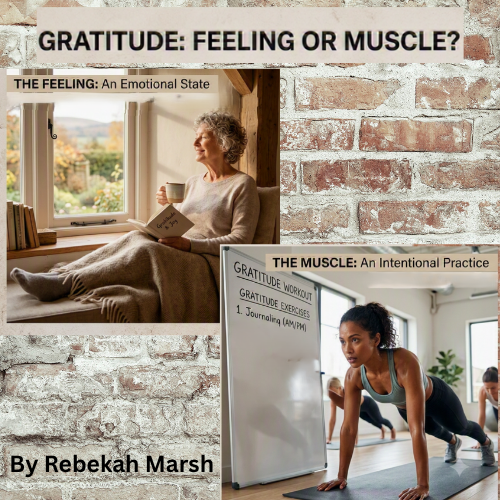
God designed our minds with the remarkable ability of neuroplasticity—the capacity to build new pathways through repeated patterns of thought. Each time you choose gratitude over criticism, you strengthen a healthier pathway. Like muscles developed through consistent use, your spiritual muscles of faith grow stronger through this grateful act of worship.
Psalm 107:1 tells us to “Give thanks to the Lord, for He is good, His love endures forever.”
1 Thessalonians 5:18 states, “Give thanks in all circumstances; for this is the will of God in Christ Jesus for you.”
Psalm 139:14 instructs us with “I praise You because I am fearfully and wonderfully made; Your works are wonderful, I know that full well.”
Can I be honest? When it comes to our bodies, practicing gratitude can feel difficult. My body carries many aches and pains from the ongoing symptoms of Multiple Sclerosis. My husband, Ricky, is still dealing with the effects of biliary/liver cancer surgery more than two years later.
Some days, the pain makes us want to complain about aging, struggling, and feeling as though our bodies are working against us—as if they are no longer “good enough.”
We are both learning to cultivate gratitude for what our bodies continue to do for us. Rather than concentrating on every imperfection, we are choosing to recognize what remains good and to remember what God has declared good. We are endeavoring to remain thankful for the many ways our bodies continue to serve us.
Sisters, your body has been performing thousands of miracles every day while you have been criticizing it. I want to challenge you to work on finding three things your body did for you each day to replace the critical attitude.
Maybe your legs carried you through a busy day.
Maybe your arms hugged someone you love.
Maybe your hands prepared a meal.
Begin to notice and voice it to God as praise because gratitude does not just change your perspective – it changes you.
Over time, those new pathways become stronger. The old patterns begin to lose their grip, and Psalm 139: 14 slowly becomes more than a verse you quote. It becomes a truth you live. A truth you believe. A wonder-filled truth you know “full-well.”
Gratitude starts as a feeling, grows through practice like a muscle, and eventually becomes a mindset of seeing life through a thankful heart.
My Prayer
Dear Jesus, thank You for the blessings You pour into my life today. Thank You for the gift of this wonderful body—for the ability to walk without assistance, to sing praises to Your name, and to hear much of what others say to me. Help me see my life through the lens of gratitude, even when everything is not easy or complete. I know “full well” that You love me unconditionally and that I belong to You. In Jesus’ name, Amen.
Rebekah Marsh
Lean into Jesus Ministries
#rebekahmarshblogs